
115 Years of International Women’s Day: Celebrating the Legacy of Women in Equestrian Sport
08. Mar 2026 / Category: Press Release
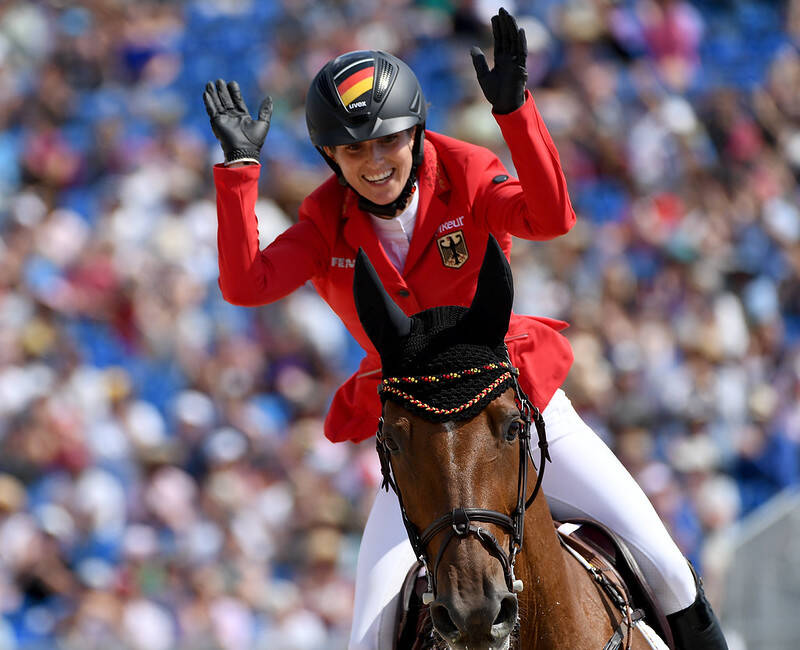
In 2026, we mark 115 years of International Women’s Day. It is a moment to reflect, to celebrate, and to recognise how far we have come. In equestrian sport, that journey is one we know intimately.
Long before most Olympic disciplines had begun to address gender equality, our sport was already demonstrating what it looks like in practice — because success in equestrian sport relies not only on strength of performance, but on empathy and the strong bond between horse and rider — and in that, it has always known no boundaries of gender.
Women have not simply participated in that story. They have shaped it as pioneers, champions, leaders, and the countless individuals whose daily dedication keeps this sport alive. Their contributions span disciplines and generations, and they continue to inspire riders across Europe and beyond.
The Early Breakthroughs
The modern story begins in Helsinki, in 1952. Danish rider Lis Hartel, partially paralysed from polio, unable to walk unaided, won individual silver in dressage, becoming the first woman to win an Olympic equestrian medal. She was lifted onto the podium by the Swedish rider who had beaten her. It remains one of the most quietly extraordinary images in Olympic history and it set the tone for everything that followed.
By 1956, women were fully integrated into Olympic equestrian competition. Equestrian sport became, and remains, one of the few disciplines on the Olympic programme where men and women compete on an equal playing field for the same medals.
Just one year later, in 1957, Sheila Willcox (GBR) became the first woman to win the European Eventing Championship. It was not simply a personal milestone, it was a declaration that women belonged at the very top of the sport.
Royal Influence and Generational Continuity
In the decades that followed, women continued to raise the benchmark. In 1976, Anne, Princess Royal competed at the Montreal Olympic Games in eventing, bringing a visibility to women in top level equestrian sport that extended well beyond the arena. Her subsequent decades of service to equestrian governance left a legacy as significant as any competitive result.
That spirit carries across generations. Zara Tindall (GBR) won team silver at the London 2012 Olympic Games, illustrating how in equestrian sport excellence is often passed down, nurtured through families and yards from one generation to the next.
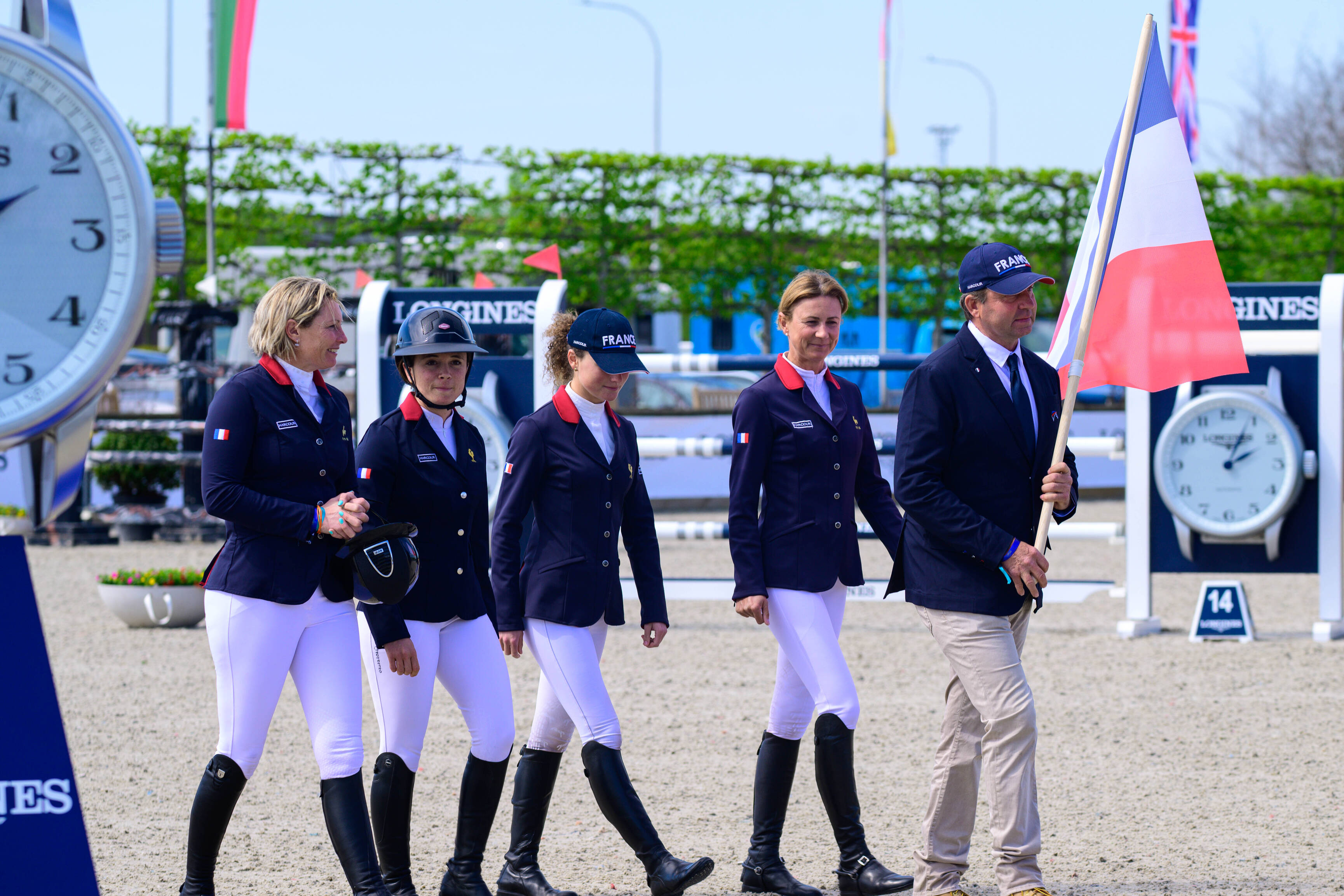
That generational thread is not only symbolic, but visible on the field of play. When Pénélope Leprévost (FRA) competed in the Longines EEF Series alongside her daughter Eden Leprévost Blin-Lebreton (FRA), it captured something that is rare in top level sport. Two generations competing together on the same international stage, not as a sentimental gesture, but as teammates, highlighting the strength of European equestrian pathways. The remarkable longevity in this sport allows champions to remain at the highest level long enough for the next generation to rise through the ranks and ultimately compete alongside them.
Defining Excellence: The Modern Era
If the early decades were defined by entry, the modern era has been defined by dominance.
No athlete in equestrian history has set a standard quite like Isabell Werth (GER). Across more than three decades at the top of dressage, she has become the most decorated equestrian competitor of all time. With 14 Olympic medals, including eight golds, nine World Championship medals and an extraordinary 21 European Championship gold medals, her career has not just spanned generations, it has defined them. She has not simply achieved, she has transformed what people believe is possible in this sport.
In show jumping, the landmarks have been equally hard-won.
In 2004, Germany’s Meredith Michaels-Beerbaum stood at the very top of the sport making history as the world number 1 in show jumping, a height no female rider had reached before or since, and a standard that continues to inspire.
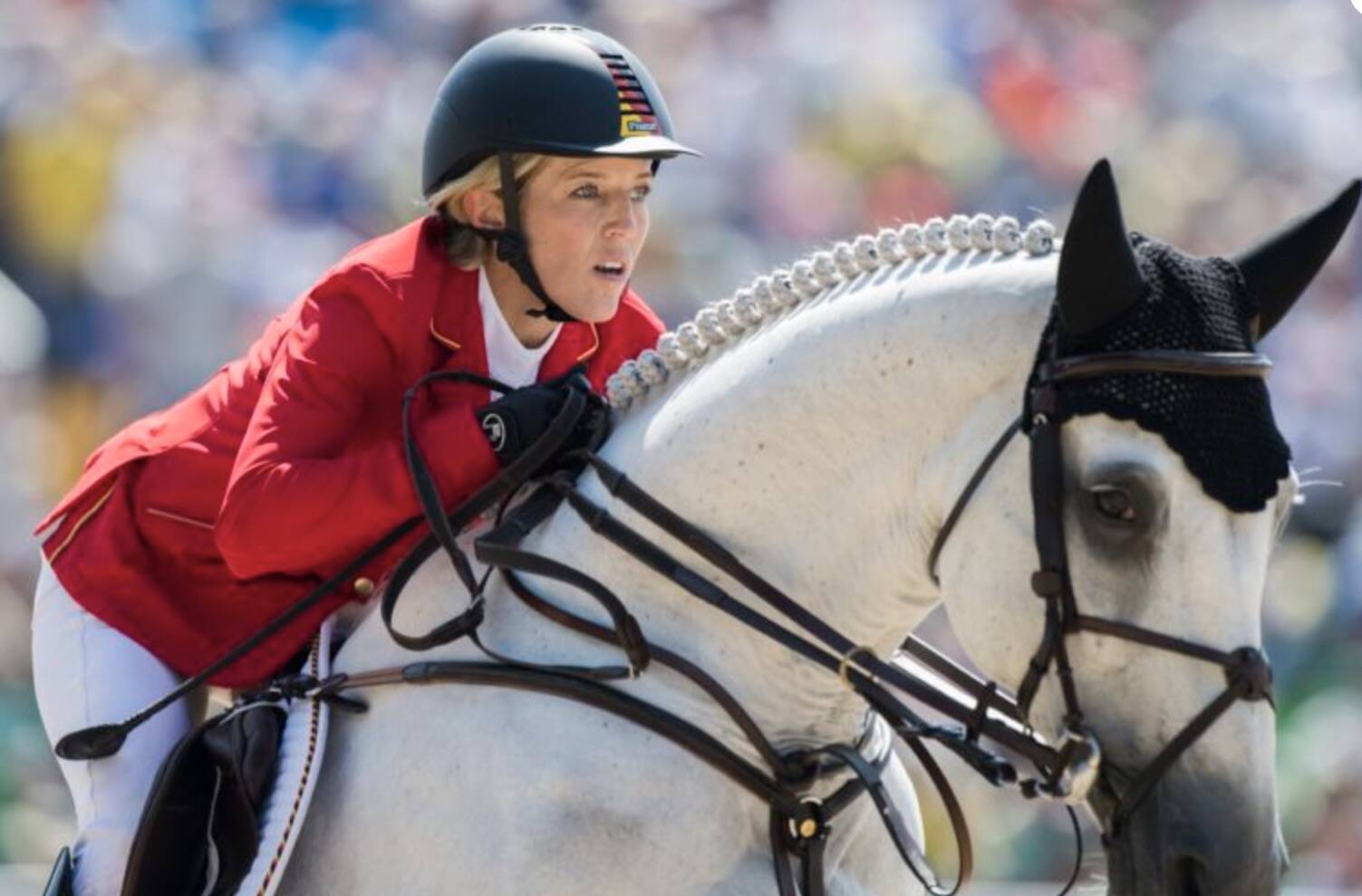
In 2018, Simone Blum (GER) with her mount DSP Alice became the first woman to claim individual gold in show jumping at the FEI World Equestrian GamesTM in Tryon (USA), a discipline measured in fractions of seconds and millimetres, where success is determined entirely by precision and performance.
Individual Olympic show jumping has historically been one of the most male-dominated arenas in the sport. That makes every podium appearance by a woman not just a personal achievement, but a statement, each one shifting the narrative a little further. Riders such as the USA’s Beezie Madden have exemplified this, combining Olympic medals with a career of rare longevity and consistency that has quietly redefined expectations.
Beyond the Arena
Medals, of course, are only part of the picture.
At every European Championship and international event, women are woven into the fabric of everything that happens. They are the grooms whose expertise and dedication ensure that horses arrive at the start in peak condition. They are the officials and stewards who uphold the integrity that this sport depends upon. They are the course designers who craft the courses that test the very best combinations. They are the event directors and organisers who bring these competitions to life, and the volunteers across the continent whose quiet, consistent commitment sustains the community spirit that makes equestrian sport what it is.
And increasingly, they are the ones shaping its direction. Across the European Equestrian Federation and national federations throughout Europe, women serve as Presidents, Chairs and board members, influencing policy, building development structures and steering this sport towards a future that reflects the diversity and breadth of the community it represents.
A Legacy Still in Motion
As we mark 115 years of International Women’s Day, we celebrate all of them. The record-breakers and the quiet contributors. The Olympians whose names are etched into history, and the grooms, coaches, officials, and volunteers whose dedication shapes every competition, every day. The mothers who drove their daughters to their first lesson. The daughters who are now driving their own.
The legacy of women in European equestrian sport is not a story that has reached its conclusion. Every young rider working quietly in a stable, every woman stepping forward into leadership, every combination preparing for their next start, they are the future.
Every partnership begins with trust. So does every great chapter in this sport.