

More Than a Clear Round: What Makes a Great Nations Cup Horse?
27. Aug 2026 / Category: Press Release
Report: Eleanore Kelly
When a horse enters the arena wearing the colours of its country in a Nations Cup, the pressure is different. It is no longer simply horse and athlete competing for an individual result: every fence has consequences for the three other combinations standing alongside them, and every round contributes to the fortunes of an entire team. So what makes a great Nations Cup horse?
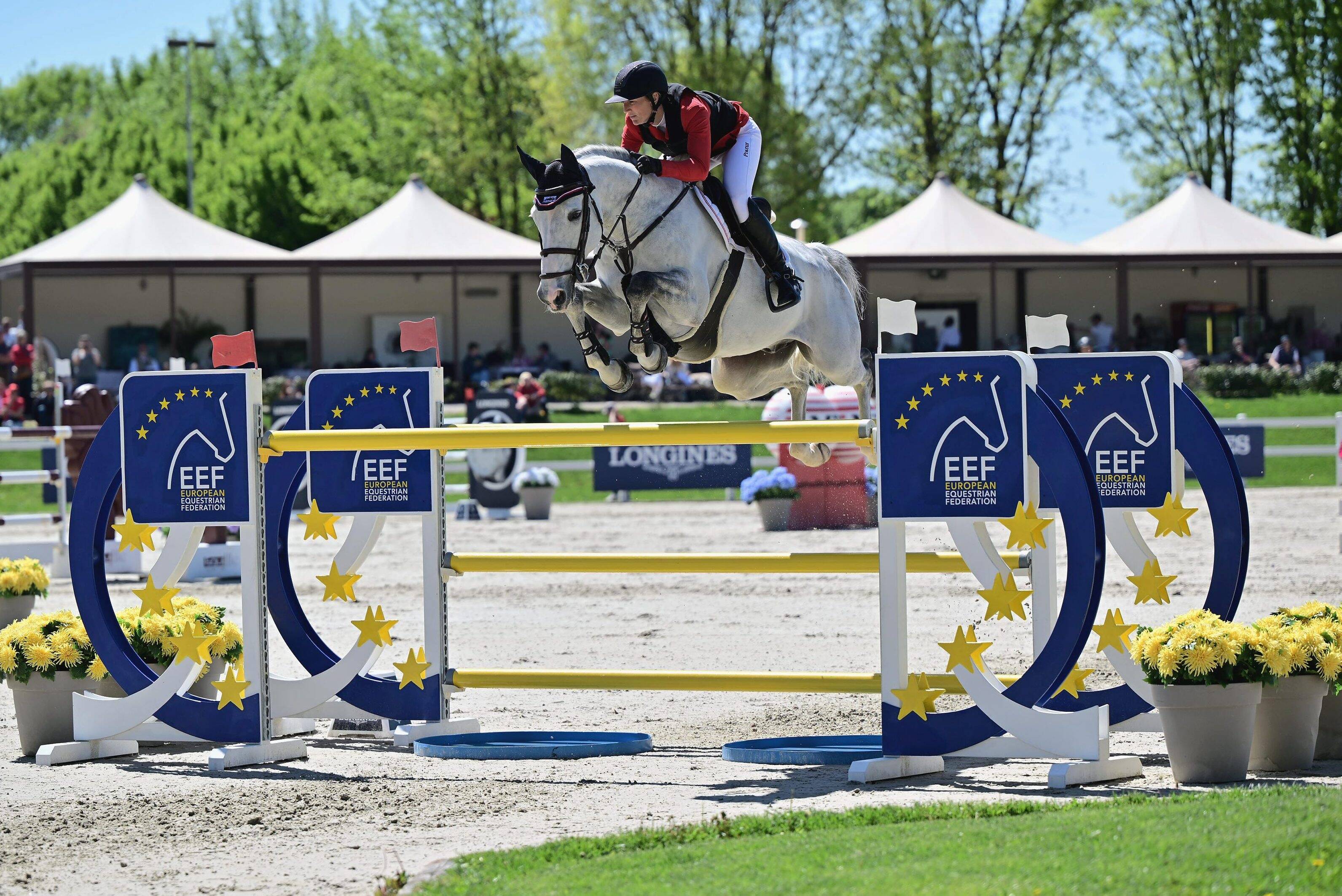
For Katharina Rhomberg, the Austrian 5* athlete who has represented her country at Championship level, the answer starts with something deceptively simple: the horse has to want to jump clear. “Intelligent, needs to have energy and a good mindset- that the horse wants to jump clear,” she says.
Rhomberg is speaking from considerable experience. The 34-year-old, currently ranked 70th in the FEI World Rankings, has used the Longines EEF Nations Cup Series to develop horses within her string, including Colestus Cambridge, who subsequently represented Austria at the Paris Olympic Games in 2024. She was also part of the Austrian team that won bronze at the 2023 FEI European Championships, the nation's first jumping team podium at a major championship since the 1992 Olympic Games.
Her experience illustrates one of the fundamental purposes of the Longines EEF Nations Cup Series: it is not simply about finding the four best horses available today. It is a development pathway, giving emerging horses and partnerships the opportunity to learn the unique pressures of team competition and progress towards the sport's biggest stages.
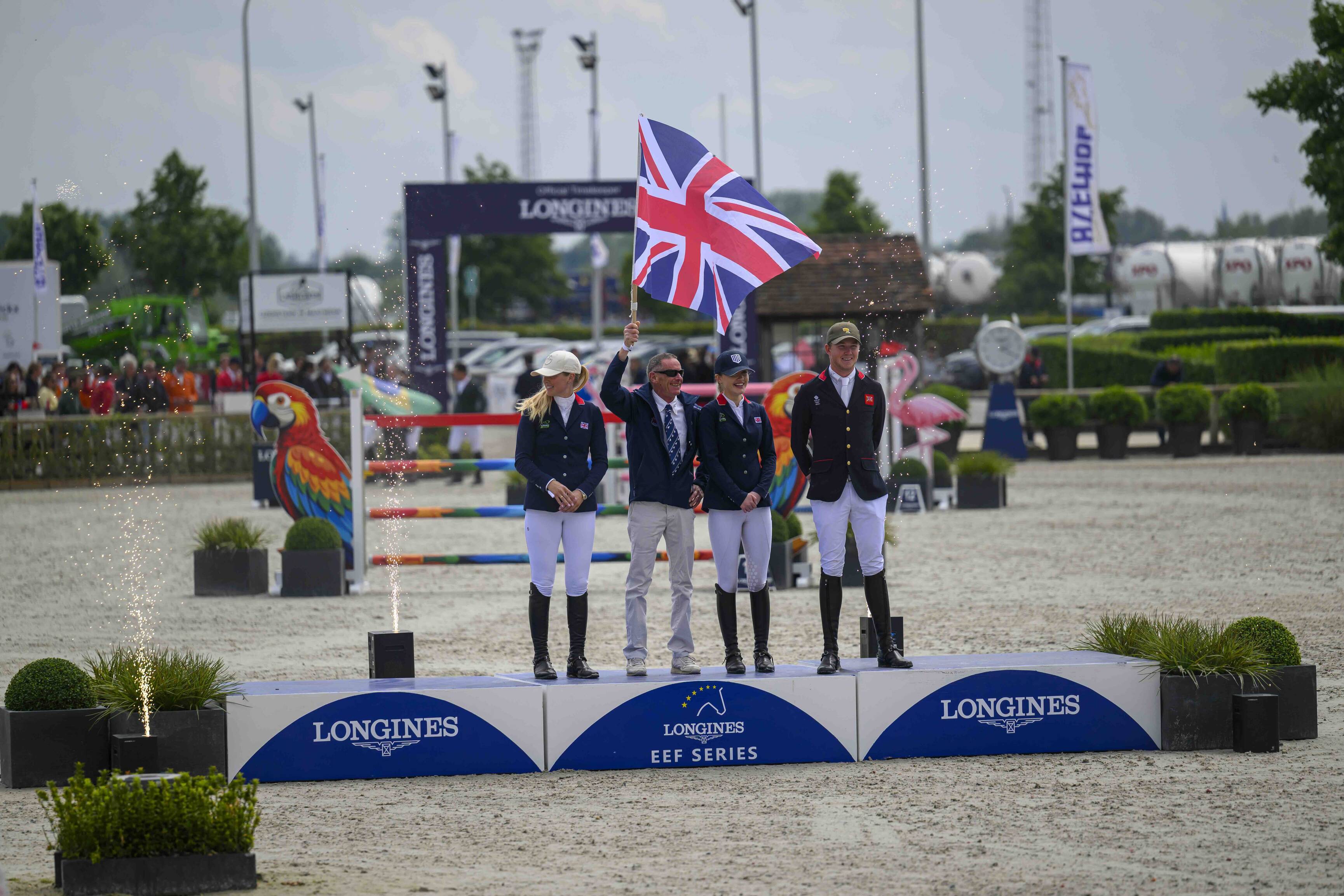
British Chef d'Equipe Matt Lanni, himself a former international show jumper, puts it even more explicitly. “The EEF Series is a Nations Cup Development Series. What you would do choosing these teams for the EEF Series would be slightly different for what you would do for your 4 or 5 star competitions.”
That distinction is crucial. The Series provides an environment in which countries can test new combinations, gain experience and build the depth of their future squads, while still competing in the format and atmosphere of international team sport.
Brave, intelligent, and reliable
For Rhomberg, one of the defining characteristics of a Nations Cup horse is bravery.
“I think that Nations Cup horses really have to be brave and shouldn't be spooky at all,” she says. “Not afraid of walls and stuff like that, because if a horse spooks it’s very expensive for the team.”
There is another particular test that makes Nations Cup jumping different from most individual competitions: the water jump. “Nations Cups are the only competitions in a horse's career where it will be asked to jump the water jump twice,” explains Lanni. “Grand Prix and other individual competitions, they only jump it once. So jumping water twice is also quite an important factor when we look at a horse.” For Rhomberg, a horse that is naturally confident in water is therefore a valuable asset. “They need to be good water jumpers because you have to jump water in both rounds.”
But perhaps above all else, both Rhomberg and Lanni agree that reliability matters. “I prefer dependable horses because they will never let you down,” says Rhomberg. “And even if you once don't have your best day, they will be there for you to help you out. And I think with the right partnership they can get spectacular as well.”
Lanni agrees that consistency is “a top priority”. In a team competition, an unpredictable horse can put enormous pressure on the rest of the squad. “If you have a horse which is capable of jumping clear but also capable of racking up a few penalties, they won’t be as high on the list for selection because they could put the team in a difficult position where no one else has the room to manoeuvre or can have a bad round.”
That does not mean spectacular horses are unwanted. Rather, the ideal Nations Cup horse combines athletic ability with the confidence and consistency to deliver it when required.
Two rounds, one big test
The ability to perform twice is another essential ingredient. “Temperament is very important,” says Rhomberg. “Already for the reason to jump two rounds in a row with the same energy and focus.” Ideally, she says, the horse will actually thrive on the atmosphere. “I think these horses are the best in the end because they feel when it’s important and when they have to give 110%- and they really do and fight for you.”
Lanni takes a slightly more situational view of temperament. The characteristics that make a horse ideal for one Nations Cup may not necessarily make it ideal for another. “If you have a horse that is very hot and you have a hot climate, they will probably cope with it better than a horse that is a bit more laidback and possibly susceptible to becoming a little too quiet in a venue with a warmer environment,” he explains.
The horse must also retain its performance throughout the first round and be physically and mentally capable of returning to the arena for the second. “If the horse is of the temperament that it can lose performance towards the end of one round, that doesn’t bode well if it has to go and do two full rounds,” says Lanni.
The partnership comes first
For all the qualities that can be listed on paper, however, neither Lanni nor Rhomberg believes there is a substitute for the relationship between horse and rider. “It is always the bond between horse and rider,” says Rhomberg. “If you have that special bond it's a very special feeling walking into the ring because what counts is only you two in that moment.” That is followed by trust. “If you can completely trust your horse outside and inside the ring, it’s something special.”
For Lanni, assessing that relationship is a central part of his job as Chef d'Equipe. “We all know that horses and riders go through phases, peaks and troughs of performance,” he says. “Trying to understand when a horse and rider are together and both in a good place at the right time- that is the art of what we do.”
The aim is to select a combination when “both of them are really together and likely to produce a top performance”. It is why watching a horse in competition is only part of the selection process. Lanni and his team spend time watching horses at home, in the stable yard and schooling.
“You really get a feel for the horses' ability, how easy they find it jumping, how well mannered, how the rider can motivate the horse and bring it to its peak performance,” he says. “None of these things a competition record will show you. Yes, they need to pass a mark on a competition record, but we learn far more from actually being with them and seeing them in the flesh.”
Experience versus potential
Perhaps the most interesting aspect of the Longines EEF Series is that experience is not necessarily a prerequisite. “In the Longines EEF Series, experience of Nations Cups is not vital because it is a development series,” explains Lanni. “You are in a position where you want to try new horses and new partnerships in this environment.”
The selection strategy can therefore change depending on where a team is in the Series. “If it’s one that counts, because if we qualify it gives us the chance to try even more partnerships and new horses as we go along, then maybe we would use two or three experienced ones to make the result as good as possible in order to qualify, then give other new horses the chance in the Series.”
The objective is not always simply to win either. “We would obviously like to win, but it’s not always the case in this Series that winning is the most important thing as it’s really about development,” Lanni explains.“If it’s a toss-up between an experienced horse that doesn’t need to go and one that could benefit from the experience, we would choose the latter. Because we are thinking forwards to the future of these horses and partnerships.”
Rhomberg agrees that experience can be built progressively. “I think you can only really prepare with showing. Starting with small shows with less spectators, going to some bigger ones with more atmosphere and then finally Nations Cup shows.” Ultimately, she says, trust is what makes that progression possible. “If the horse trusts you completely, you will be prepared.”
Recovery is part of performance
Preparing a Nations Cup horse is not simply about jumping enough fences. Knowing when not to jump is equally important. “It’s very important!” says Rhomberg when asked about recovery. “My horses often get weeks of recovery in between shows. I think it’s better for their health.
Her horses are checked regularly by a vet, but she also pays close attention to their mental state. “If they feel motivated and fresh and a bit bored at home it’s definitely time to go to the show again,” she says. There is a caveat, however. “Some horses are always motivated. There you have to stop them and yourself a bit because recovery really matters.”
Lanni similarly assesses whether horses are physically and mentally ready by observing them over time- how they behave in the stable, how they cope with a competition day, how they recover after jumping and how easy they find their work. The physical demands are significant. “We aim to have horses in the best physical condition,” he says. “It’s a lot of jumping.”
Developing tomorrow's stars
The search for a great Nations Cup horse is therefore not necessarily a search for a finished product. “It is hard,” says Rhomberg of finding them. “Normally we want to find them when they are still young and inexperienced. So you need to have an idea of how the horse will be developing and improving and help them to do so, and feel when it’s time for some bigger tasks.”
That philosophy lies at the heart of the Longines EEF Series. Lanni recalls having to leave a horse with enormous potential out of a team selection for a Final. At the time, it was a difficult decision. But the horse continued its development through the Series and eventually became a consistent 5* Nations Cup performer. “It didn’t matter because it gained from the EEF Series in other events and developed into a really good consistent 5* Nations Cup horse, which is exactly what the EEF Series is intended to do.”
Of course, it is not only horses that are being developed. “The Series also develops young riders and gives them experience, which is also highly important and the purpose of this Series,” says Lanni.
Team competition introduces a different kind of pressure. Athletes are no longer responsible only for their own score; they have three teammates relying on them. “It’s a very different pressure when you are competing for a team and you have three other teammates,” he says. “That can change many riders' performance when they are under that pressure.” That is the essence of the Longines EEF Nations Cup Series: it is about building the future of the sport, not simply selecting its established stars.
And what makes the perfect Nations Cup horse? For Rhomberg, there is ultimately one characteristic she would never compromise. “Reliability – you need to really be able to trust your horse and the horse needs to trust you too.”
Because when the pressure rises, the atmosphere builds and a country's result rests on four combinations, the greatest asset a horse can give its rider is the knowledge that, when it matters most, they can count on each other.
Where to Watch and Follow
For the latest updates, team announcements, and behind-the-scenes content throughout the 2026 Longines EEF Series, follow the Longines EEF Series website and the European Equestrian Federation. Join the conversation on the Longines EEF Series social media on Instagram and Facebook.
Download the Longines EEF Series press kit here.
Watch the all the live action and replays on ClipMyHorse.TV, the official livestream partner of the Longines EEF Series.
Full results from the regional qualifiers and semi-finals of the Longines EEF Series 2026 season can be viewed here.