

Building the Challenge: The Course Designers Behind the Longines EEF Nations Cup Series
11. Aug 2026 / Category: Press Release
Report: Eleanore Kelly
The athletes and their horses may be the ones in the spotlight, but before every Longines EEF Nations Cup begins, another group has already done the hard work of deciding exactly what questions the horse-and-rider combinations will have to answer.
Course designers are the architects of the sport. They decide where the fences go, how the distances ride, how technical a track should be and, crucially, where the line lies between challenging and unfair. Across the Longines EEF Nations Cup Series, that challenge evolves. The Regional Qualifiers provide an opportunity for developing riders and nations to gain experience; the Semi-Finals raise the stakes as teams fight for their place in the Final; and then, in Avenches, Switzerland, in September, the best combinations face the ultimate test.
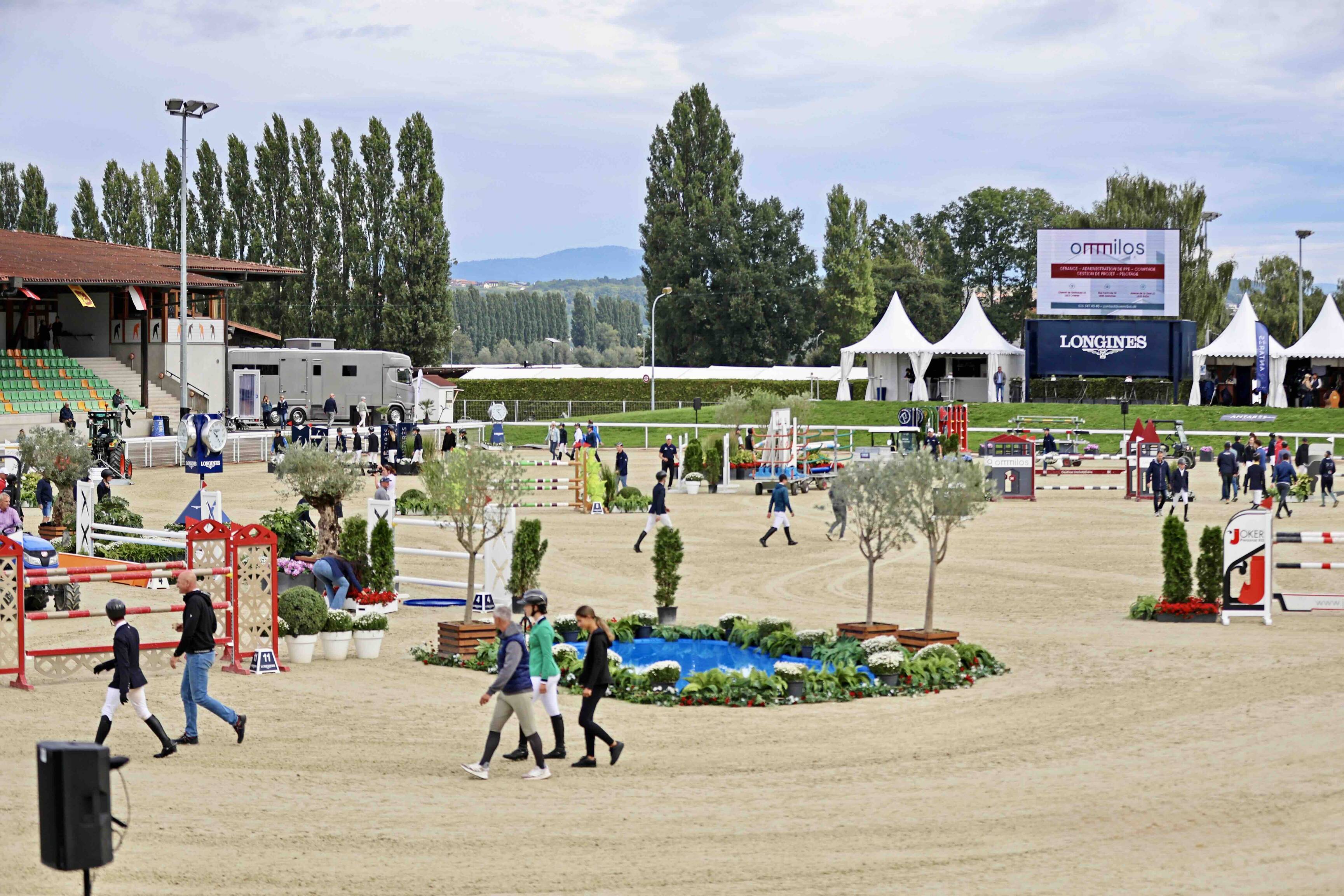
At the heart of that Final will be Gérard Lachat, who is designing the Avenches course for the second consecutive year. He has been a course designer for 37 years, 13 of them at international level, and his CV includes the World Cup Final in Basel and courses at some of the world's most prestigious shows, including Geneva, Basel and St Gallen.
What he loves about the job is the creativity, looking for interesting layouts and the relationships with people- course builders, athletes and trainers. His inspiration can come from almost anywhere. “Inspiration comes when I start drawing the plans, but also when I watch horses jumping at other competitions. I think to myself that certain lines would be good to incorporate into my courses.”
But creativity comes with responsibility. For Lachat, the first consideration is always safety. “First and foremost, the safety of the horses and riders. Then the course has to be interesting for the riders and enjoyable for the spectators to watch.”
The distances must be carefully calculated and adapted to the level of competition, with the aim of creating mistakes rather than refusals. It is a philosophy that has become increasingly important as the sport itself has evolved. Horses are more athletic, sensitive, respectful and spirited, while the standard of riding has improved. Consequently, courses have become “much lighter, more technical and more delicate” in the interests of horse welfare, while the appearance of obstacles has also changed, with more use of single-colour and pastel fences. The Longines EEF Nations Cup Series provides a particularly good example of how course design can be adapted to the level and purpose of a competition.
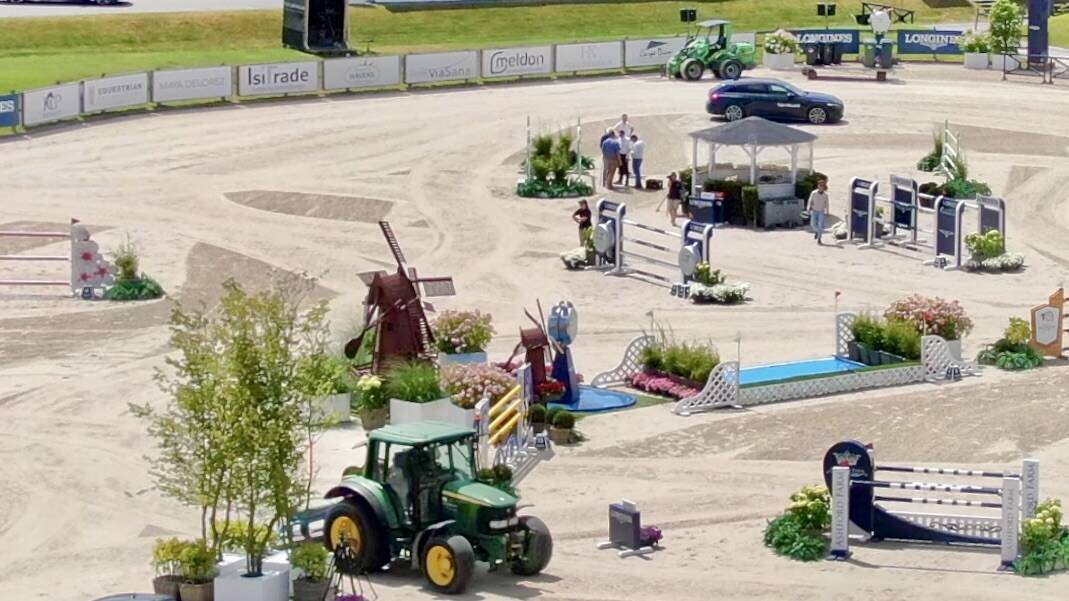
Bart Vonck, who is designing the Semi-Final at Peelbergen in the Netherlands as well as the Regional Qualifier in Drammen, Norway, has designed courses for the EEF Nations Cup for five years. His first consideration is always the starting list.
“When I am designing the course for an EEF Nations Cup, first of all I always look at the starting list to look at the level of riders that there are,” he says.
A Nations Cup, he explains, has to be designed differently from a Grand Prix because it is a team competition, with horses jumping twice. “It must be demanding but not too much because you know that if the Nations Cup in Peelbergen is on Friday they will come back to jump the Grand Prix on Sunday, so you have to take care.”
The Regional Qualifiers are already serious jumping. At 1.50m, they are certainly not an easy introduction to international sport. But they have an important role beyond simply determining the results. “You get a good mix of riders that have a lot of experience mixed with younger riders that have a lot of talent,” says Vonck.
“People who are going for the first time to do the Nations Cup, I also think that is the purpose of the Nations Cup – to let younger riders jump their first Nations Cup and gain experience.”
That development of both riders and nations is one of the strengths of the EEF format. The Series provides a route for countries that may not yet have the depth of experience of the established Super League teams to compete against stronger nations, learn from them and develop their own riders.
For Elena Boix Gracia, who has more than 30 years' experience as a course designer and designed the EEF qualifier at Šamorín this year, there is a particular fascination in watching a course move from a drawing on paper into a living competition. She began as an amateur show jumper and says she has “always been fascinated by the idea of creating something that riders and horses would later bring to life.”
“Designing a course, at any level, thinking about the technical challenges, the type of fences and materials, the distances and dimensions, and then seeing riders and horses turn that design into reality is, for me, one of the most rewarding aspects of our sport. Even after three decades in the job, I still enjoy every single moment I spend in the arena.”
The EEF Nations Cup environment is particularly special. Boix Gracia designed her first EEF Nations Cup in Bulgaria, in 2021 and remembers it as “an extraordinary experience”.
“The atmosphere during a Nations Cup is something truly special and very different from what you experience at a normal competition. The passion and excitement from the crowd are almost impossible to describe. You can really feel how deeply they are involved in the competition, sharing every moment with the riders and their teams.” That atmosphere, she says, is “incredibly motivating” and makes designing a Nations Cup even more rewarding.
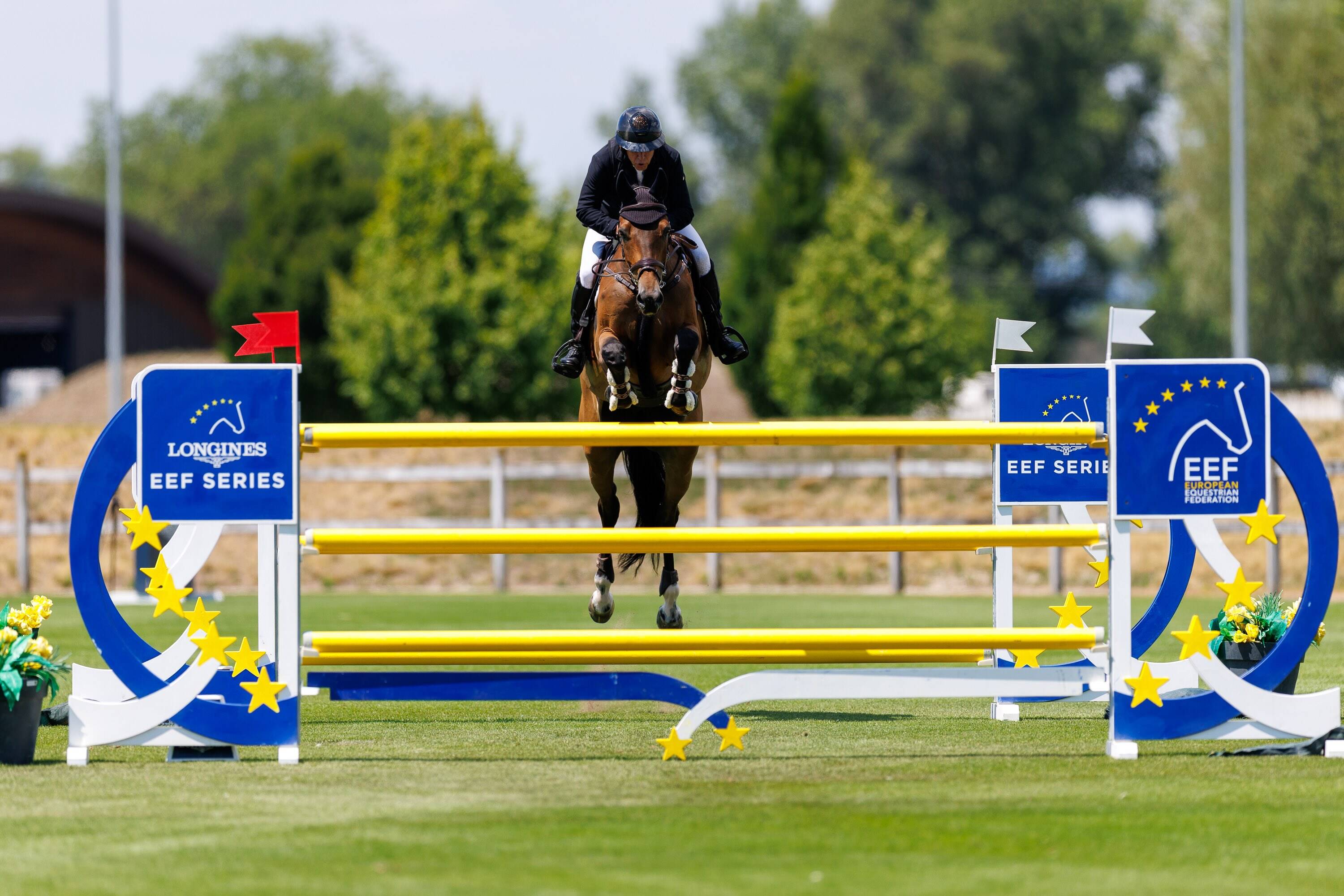
Her experience at Šamorín also highlights how much a course designer can be influenced by the venue itself. The Slovakian venue was designed by Professor Arno Gego to the highest sporting standards, with several arenas, an indoor arena and an extraordinary collection of fences and materials. Its storage area, Boix Gracia says, is “like being a child in a playground”, with so many possibilities for creativity.
The grass arena provides another challenge. “Designing on a grass arena is always something special,” she says. The main arena's permanent obstacles and unique characteristics make designing there particularly distinctive, while the horses “jump extremely well on the grass”.
But regardless of the arena, Boix Gracia's objective remains consistent. “For me, the most important thing when designing a course, whether for a national competition, an international event or a Nations Cup, is that the horses jump well.” She wants horses to find a good rhythm, face the technical challenges with confidence and have the opportunity to show their qualities.
That becomes even more important in a Nations Cup because the horse jumps the course twice. “You have to bear in mind that the horses will jump the course twice. This adds another dimension to the design, because when considering a particular distance, fence or type of material, I have to think not only about how it will ride in the first round, but also about how it may affect the horses and what it could mean in the second round.”
The progression from Regional Qualifier to Semi-Final therefore isn't simply about making fences bigger. It is about making the questions more demanding while maintaining fairness. The Semi-Finals are contested at the same 1.50m height as the Regional Qualifiers, but the quality and experience of the field is higher, with every team fighting for one of the coveted places at Avenches.
Boix Gracia believes that means the Semi-Final courses must be at a slightly higher level. “They should provide an appropriate challenge and be sufficiently selective to identify the strongest teams and determine which ones deserve to progress to the Final.”
Vonck agrees with this. At Peelbergen, the teams are no longer simply gaining experience; they are trying to win the “big ticket” to Avenches. At the Final, the competition moves up to four-star level and the fences rise from 1.50m to 1.55m. It is a significant increase, and one that changes the demands placed upon both horse and rider. “When you get to the Final it is a 4* Nations Cup,” says Vonck. “The Nations Cup is also held on the last day, on the Sunday, and the course is 1m55. That makes a big difference. Countries have to step up and select horse-and-rider combinations with the experience and talent required for that level.”
For Lachat, designing the Final inevitably brings additional pressure. “It's a final, so there are always higher expectations from the riders, who all want to win, so there's a little more pressure for me.”
Yet the objective isn't simply to make Avenches the biggest or most difficult course of the Series. “My goal is to design a high-level final where the horses can perform without being pushed to their limits, where the riders enjoy riding the course, and where the spectators are treated to a great show.”
The course will be more technical than those in the qualifying rounds, with challenges appropriate for a top-level Final. But it must also flow, respect the welfare of the horses and create the suspense that makes a Nations Cup so compelling. Lachat hopes, in particular, that the course will produce movement on the leaderboard. “I hope there will be some changes in the rankings between the first and second rounds and that there will be suspense until the end of the competition.” It is a delicate balancing act: a course must be difficult enough to expose mistakes and separate the best teams, but never so difficult that it stops being fair.
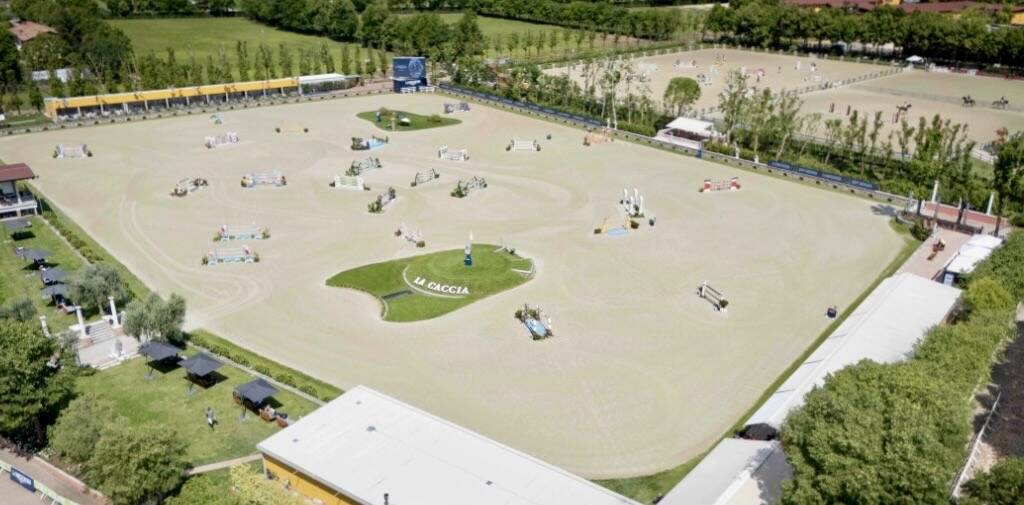
Paolo Rossato, who designed the Longines EEF Nations Cup at Scuderia La Caccia this year, describes course design as the perfect combination of his lifelong passions.“Course designing combines my lifelong passions for horses, my creativity and my predisposition to finding solutions to challenges, whether those challenges involve the height of the class, the type of competition, the arena or the location.
This was Rossato's first Longines EEF Nations Cup, and he says his objective was to find “the best possible balance between detailed technicality and fairness to make the course selective, always having in mind the horses.”
That balance becomes even more important at the Final. “At the final you have the top teams with the best horse-rider combinations,” he says. “The technical content of the course should be at its finest, keeping the horses welfare always in mind.”
That, ultimately, is the journey through the Longines EEF Nations Cup Series. The Regional Qualifiers are already demanding 1.50m competitions, but they provide an important platform for younger riders and developing nations to gain experience. The Semi-Finals sharpen the challenge, demanding more from combinations that have already proved themselves and ensuring that only the strongest teams reach the Final.
Then, in Avenches, the competition reaches its peak: four-star level, 1.55m fences, the best teams and the pressure of a Final. Yet beneath the rising heights and increasingly technical questions, the fundamental principle remains the same: The horse must come first.
For Lachat, the challenge is to continue finding new ways of testing riders and horses without compromising their welfare. “I always try to find new layouts and I constantly challenge myself to improve.”
At Avenches in September, he will have one final opportunity to do exactly that – creating the questions that will decide who has earned the title of Longines EEF Nations Cup Series champion.
Where to Watch and Follow
For the latest updates, team announcements, and behind-the-scenes content throughout the 2026 Longines EEF Series, follow the Longines EEF Series website and the European Equestrian Federation. Join the conversation on the Longines EEF Series social media on Instagram and Facebook.
Download the Longines EEF Series press kit here.
Watch the all the live action and replays on ClipMyHorse.TV, the official livestream partner of the Longines EEF Series.
Full results from the regional qualifiers and semi-finals of the Longines EEF Series 2026 season can be viewed here.